

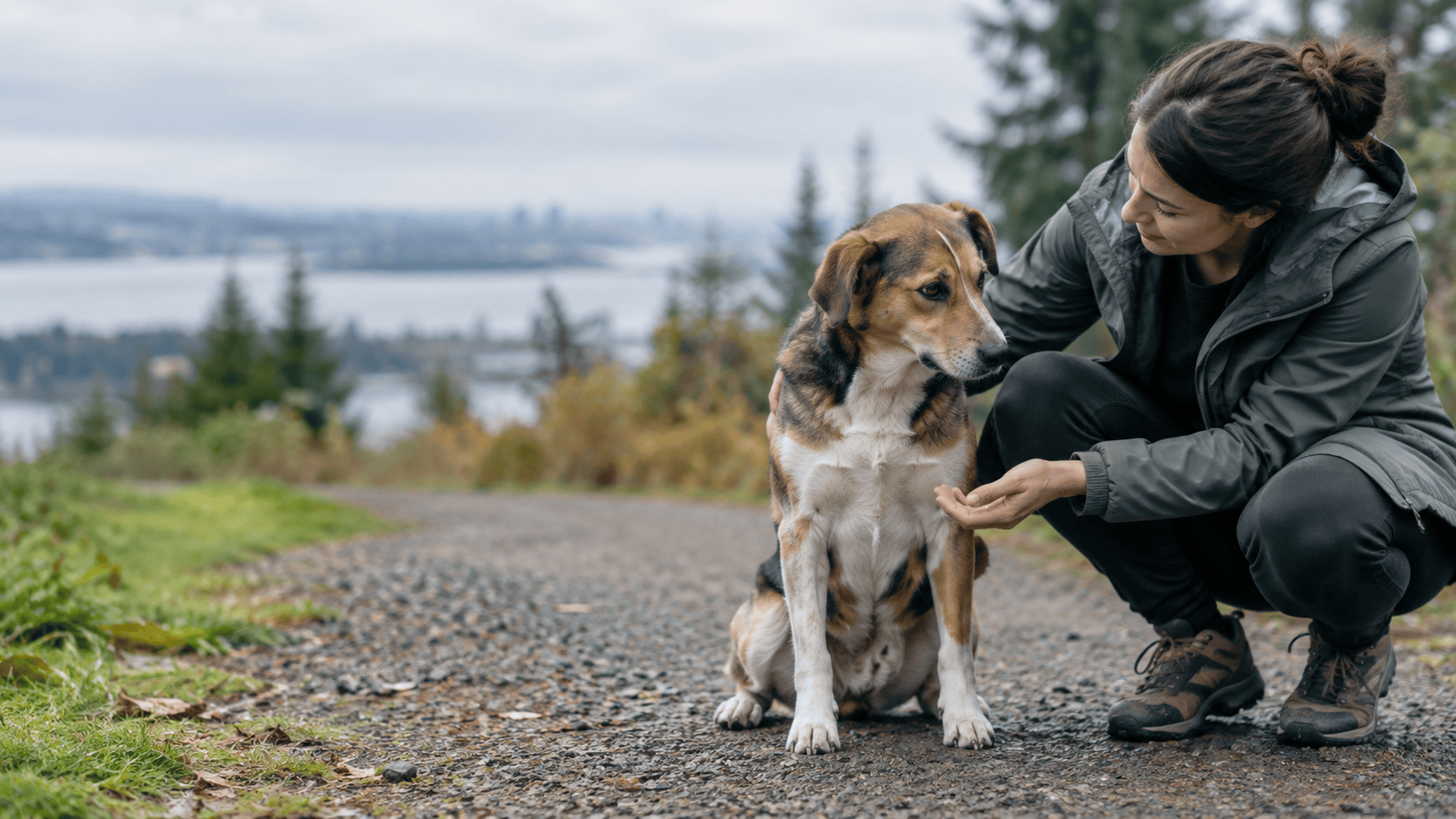
Before we give up on a dog, we owe that dog every reasonable opportunity to succeed.
There is no one-size-fits-all approach to dogs when it comes to training
I don’t believe good trainers need to agree on every tool or every methodology.
Dogs are individuals. Their genetics, temperament, environment, history, drives, fears, and learned behaviours all matter.
But I do believe we have to be honest about the limitations of certain training philosophies.
The term “force-free” is often used as though it means training without force of any kind. In reality, that label can mean different things to different people, and no training approach is completely free of consequences, boundaries, or pressure.
My concern isn’t that certain trainers choose not to use particular training tools.
My concern is when a trainer’s philosophy becomes more important than the dog in front of them.
If a trainer’s toolbox isn’t producing meaningful improvement in a serious behavioural modification case, the responsible thing to do is say so.
Refer the dog to someone with additional experience.
Bring in another professional dog trainer.
Use a different approach.
Don’t let your ideology become the reason a dog loses its life or is put on psychotropic medications!
Behavioural cases aren’t all the same.
There is an enormous difference between teaching a puppy not to jump and helping a dog with serious aggression, intense reactivity, and deeply ingrained behavioural patterns.
Some dogs need far more than treats and environmental management.
They need structure.
They need boundaries.
They need clarity.
They need consequences that they can understand.
And, most importantly, they need a skilled trainer who understands how to communicate with that particular dog.
This is where balanced training can make an enormous difference.
Balanced training allows a trainer to use multiple forms of communication and reinforcement, rather than restricting themselves to one category of tool. Reward the behaviours we want. Build engagement. Create motivation. Establish boundaries. Build connection. Interrupt dangerous behaviour when necessary. Teach the dog what works—and what doesn’t.
The objective isn’t to punish a dog.
The objective is to change behaviour and create a dog that can safely function in the real world.
Sometimes rehabilitation means saying “no”
A dog with true behavioural problems cannot always be managed by simply avoiding triggers.
Eventually, real life happens.
Someone walks through the door.
Another dog appears.
A child runs past.
A stranger approaches.
A gate gets left open.
A squirrel crosses the road.
A dog that has never learned how to think and control themselves in these situations may eventually find itself in a circumstance where management fails.
We shouldn’t simply be asking:
“How can I prevent this dog from ever doing this?”
We should also be asking:
“How can I teach this dog to become a critical thinker and make different choices?”
That is a very different goal.
What about medication?
A dog shouldn’t automatically be considered a medication case simply because training is difficult.
And behavioural euthanasia should never become the convenient answer simply because a professional has reached the limits of their own experience, philosophy, or toolbox.
Know when your toolbox ends
Here’s something I wish every trainer—regardless of methodology—would be comfortable saying:
“This case is beyond my current expertise.”
There is no shame in that.
A force-free trainer who reaches the limits of their approach should be willing to refer to an experienced balanced trainer when appropriate.
A balanced trainer who encounters a case beyond their expertise should do exactly the same.
That isn’t failure.
That’s professionalism and that’s caring about the dog in front of you.
Our job is not to win an argument about methodology.
Our job is to help the dog.
Balanced training saves lives
I’ve seen dogs who were labelled dangerous become dogs their families could safely live with.
I’ve seen owners regain confidence.
I’ve seen dogs learn to make better choices.
I’ve seen relationships repaired.
And I’ve seen dogs who were considered lost causes get another chance.
Serious behavioural cases deserve access to the full range of appropriate training strategies—and dogs deserve trainers who are willing to think beyond ideology.
The best trainer isn’t the one with the loudest opinion.
It’s the one who can look at the dog in front of them, put their ego aside, use the appropriate tools responsibly, and ask:
“What does this dog need from me to become safer, happier, and more successful?”
Because ultimately, this isn’t about winning a debate.
It’s about saving dogs.